Residential properties throughout the Tennessee River Valley face chronic indoor pest pressures driven by high annual humidity, prolonged summer heat, and mature tree canopies. Homeowners in older valley communities…
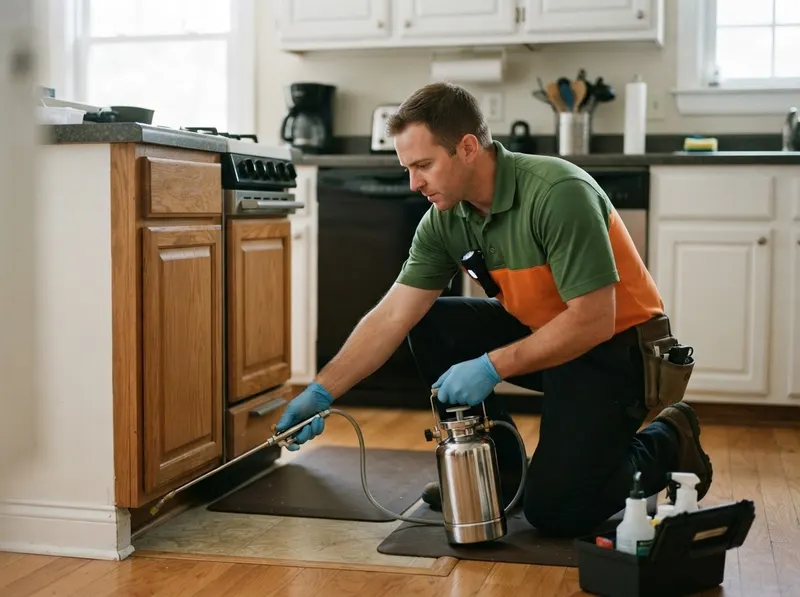
Residential properties throughout the Tennessee River Valley face chronic indoor pest pressures driven by high annual humidity, prolonged summer heat, and mature tree canopies. Homeowners in older valley communities like St. Elmo and Highland Park frequently encounter subterranean termites, American cockroaches, and house mice taking advantage of stone masonry, damp crawl spaces, and stone foundations. Modern multi-story structures in North Shore and Riverview commonly deal with odorous house ants foraging along plumbing lines and exterior siding. Managing these situations relies on integrated pest management principles established by federal environmental standards, which pair targeted applications with physical habitat modification rather than indiscriminate broadcast spraying across living quarters.
Effective household pest control begins with a detailed assessment of exterior moisture gradients, foundation penetrations, and roofline clearances. Technicians inspect ground-level entry points following structural guidelines outlined by the University of Tennessee Extension, focusing on crawl space vents, HVAC conduits, and unsealed expansion joints where pests transition inside. For crawling insect pressures like German roaches in Southside Historic District kitchens or moisture-driven millipedes in Brainerd basements, treatment protocols utilize targeted gel baits, dustings in wall voids, and low-toxicity perimeter microcapsules compliant with the Tennessee Department of Agriculture regulatory statutes. In wood-framed additions throughout Hixson and East Ridge, specialized inspections identify dry rot and carpenter ant satellite nests where structural framing meets exterior soil.
Indoor safety remains the central parameter when addressing active infestations inside living areas, especially around pets and children. Protocols reference baseline product safety evaluations published by the National Pesticide Information Center to select compounds that minimize active ingredient volatility indoors. Mechanical exclusion acts as the first line of defense: technicians seal gaps using galvanized mesh and silicone sealants based on exclusion manuals from the Centers for Disease Control and Prevention. For suburban properties located near wooded slopes in Lookout Valley and Red Bank, outdoor rodent stations incorporate tamper-resistant designs meeting ASTM International security standards to prevent non-target wildlife interference.
Structural management also requires understanding local environmental cycles. Seasonal precipitation patterns monitored by the National Weather Service Morristown Office demonstrate that spring downpours force ground-nesting ants and wood roaches toward dry subfloors, while winter freezes drive rodents indoors along foundation lines near the base of Lookout Mountain. Technicians evaluate crawl space moisture using calibrated hygrometers, aligning moisture-reduction advice with standards established by the U.S. Department of Housing and Urban Development healthy homes initiative. Disposal of compromised pantry materials or contaminated attic insulation follows municipal waste management directions coordinated through Chattanooga Public Works to protect community disposal streams. Homeowners needing immediate field evaluation can reach WestHaven Pest Services by calling (803) 887-7497.
Every job gets a firm, written price after a free on-site visit.
Tell us about your household pest control job in Chattanooga and we'll send a clear, written quote, usually the same day.
 WestHaven Pest Services